
In 2026, digital marketing is no longer optional—it is a core part of how businesses grow, compete, and stay visible. Consumer behavior has shifted dramatically over the last decade. Whether someone is looking for a local service, comparing products, reading reviews, or making a purchase, the journey often starts online. Businesses that fail to build a strong digital presence risk being overlooked by potential customers who are actively searching for what they offer.
For modern businesses, digital marketing is not simply about posting on social media or running advertisements. It is a strategic approach to attracting the right audience, building trust, generating leads, and converting interest into revenue. Companies that invest in digital marketing position themselves to grow more efficiently, adapt faster, and outperform competitors in increasingly crowded markets.
This article explores why every business needs digital marketing in 2026 and how it contributes to long-term success.
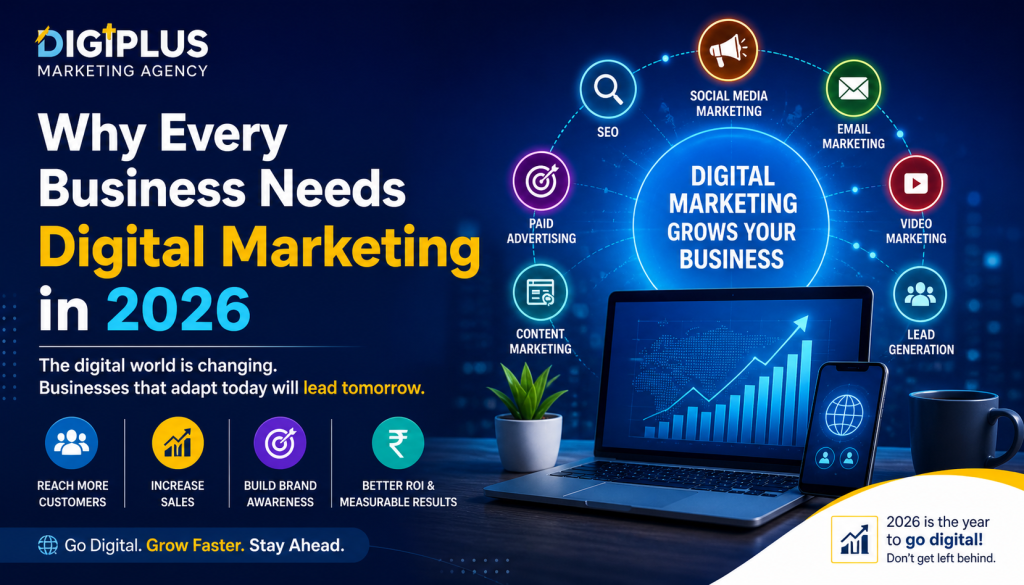
1. Your Customers Are Online More Than Ever
The majority of buying decisions now begin online. Before contacting a company, consumers often search Google, visit websites, compare competitors, read reviews, and explore social media profiles.
If your business is not visible during that research process, potential customers may never discover you.
Digital marketing ensures that your business appears where your audience is already spending time:
- Search engines like Google
- Social media platforms such as Instagram, Facebook, and LinkedIn
- YouTube and video platforms
- Email inboxes
- Industry blogs and websites
A strong online presence helps your business stay top-of-mind throughout the customer journey.
2. Digital Marketing Is More Cost-Effective Than Traditional Advertising
Traditional advertising methods such as newspaper ads, billboards, television, and radio often require significant budgets with limited ability to track performance.
Digital marketing offers a more efficient alternative.
Businesses can:
- Start with flexible budgets
- Target specific audiences
- Track every click, lead, and conversion
- Optimize campaigns in real time
- Scale what works and stop what does not
This makes digital marketing especially valuable for startups and small businesses that need measurable returns from every marketing dollar spent.
3. It Helps You Reach Your Ideal Audience with Precision
One of the biggest advantages of digital marketing is advanced audience targeting.
Instead of marketing broadly and hoping to reach the right people, digital platforms allow businesses to target based on:
- Location
- Age and gender
- Interests and behavior
- Search intent
- Purchase history
- Device usage
- Job titles and industries
This precision improves campaign performance by ensuring your message reaches the people most likely to convert.
For example, a local dental clinic can target people within a 10-kilometer radius searching for “best dentist near me,” while an eCommerce brand can show ads to users who previously visited their website but did not purchase.
4. Builds Brand Awareness and Credibility
Customers trust businesses they recognize.
Digital marketing helps build awareness through repeated exposure across multiple channels. When people consistently see your brand in search results, on social media, in email campaigns, and through valuable content, familiarity increases.
Trust grows even further when your digital presence includes:
- A professional website
- Positive online reviews
- Educational blog content
- Active social media profiles
- Consistent branding
- Client testimonials and case studies
In competitive markets, credibility can be the deciding factor between your business and a competitor.
5. SEO Helps You Generate Long-Term Organic Traffic
Search Engine Optimization (SEO) remains one of the most valuable digital marketing investments in 2026.
SEO improves your visibility in search engine results when people look for products or services related to your business.
Benefits of SEO include:
- Sustainable long-term traffic
- Reduced dependency on paid ads
- Higher brand authority
- Better website user experience
- Increased lead generation
Unlike paid advertising, SEO continues to generate traffic over time after the initial investment, making it one of the highest-ROI marketing channels available.
6. Social Media Drives Engagement and Community Building
Social media is no longer just a platform for entertainment. It has become a major business growth channel.
Consumers expect brands to maintain active social media profiles where they can:
- Learn about products and services
- Engage with content
- Ask questions
- Read reviews
- Follow updates
- Build trust before purchasing
Social media marketing helps businesses:
- Humanize their brand
- Increase visibility
- Build loyal communities
- Generate inbound inquiries
- Drive traffic to websites
In 2026, businesses without a social media presence often appear outdated or less trustworthy.
7. Paid Advertising Delivers Fast, Scalable Results
While SEO and content marketing build long-term growth, paid advertising provides immediate visibility.
Platforms like Google Ads, Meta Ads, and LinkedIn Ads allow businesses to quickly generate:
- Website traffic
- Leads
- Phone calls
- Sales
- Brand awareness
Paid campaigns can be launched quickly, tested rapidly, and optimized based on real performance data.
This makes digital advertising ideal for:
- Product launches
- Seasonal promotions
- Lead generation campaigns
- New business launches
- Scaling high-performing offers
Businesses that know how to leverage paid media can accelerate growth significantly.
8. Email Marketing Increases Retention and Repeat Sales
Acquiring a customer is only part of the equation. Retaining them is equally important.
Email marketing remains one of the most effective channels for customer retention and nurturing.
Businesses use email marketing to:
- Follow up with leads
- Share promotions
- Educate customers
- Upsell products/services
- Build loyalty
- Recover abandoned carts
Automated email campaigns allow businesses to stay connected with prospects and customers without manual effort.
In many industries, email continues to produce one of the highest returns on investment among all digital channels.
9. Data and Analytics Improve Decision-Making
Traditional marketing often leaves businesses guessing which efforts are working.
Digital marketing provides clear performance data.
You can measure:
- Website traffic
- Lead sources
- Conversion rates
- Cost per acquisition
- Return on ad spend
- User behavior on your website
- Engagement across channels
This data allows businesses to make smarter decisions, improve underperforming campaigns, and allocate budget more effectively.
In 2026, data-driven marketing is no longer a luxury—it is essential for staying competitive.
10. Your Competitors Are Already Doing It
If your competitors are investing in digital marketing and you are not, they are likely capturing customers who could have chosen your business.
Businesses that actively market online are:
- Appearing in search results before you
- Running ads to your audience
- Building larger social followings
- Establishing authority through content
- Collecting leads from potential customers first
Digital marketing is now a standard business necessity. Falling behind online often means falling behind in revenue and market share.
11. Supports Business Growth at Every Stage
Digital marketing benefits businesses at every stage of growth.
For Startups:
- Build awareness quickly
- Reach first customers
- Test offers and messaging
For Growing Businesses:
- Scale lead generation
- Improve customer acquisition
- Expand into new markets
For Established Brands:
- Maintain market leadership
- Improve retention
- Increase efficiency and profitability
No matter the size of your business, digital marketing supports sustainable growth.
Conclusion
In 2026, digital marketing is no longer optional—it’s essential for survival and growth.
From increasing visibility and generating leads to building trust and scaling your business, digital marketing plays a critical role in every stage of growth.
Businesses that adapt to digital trends will thrive, while those that ignore them risk becoming irrelevant.